
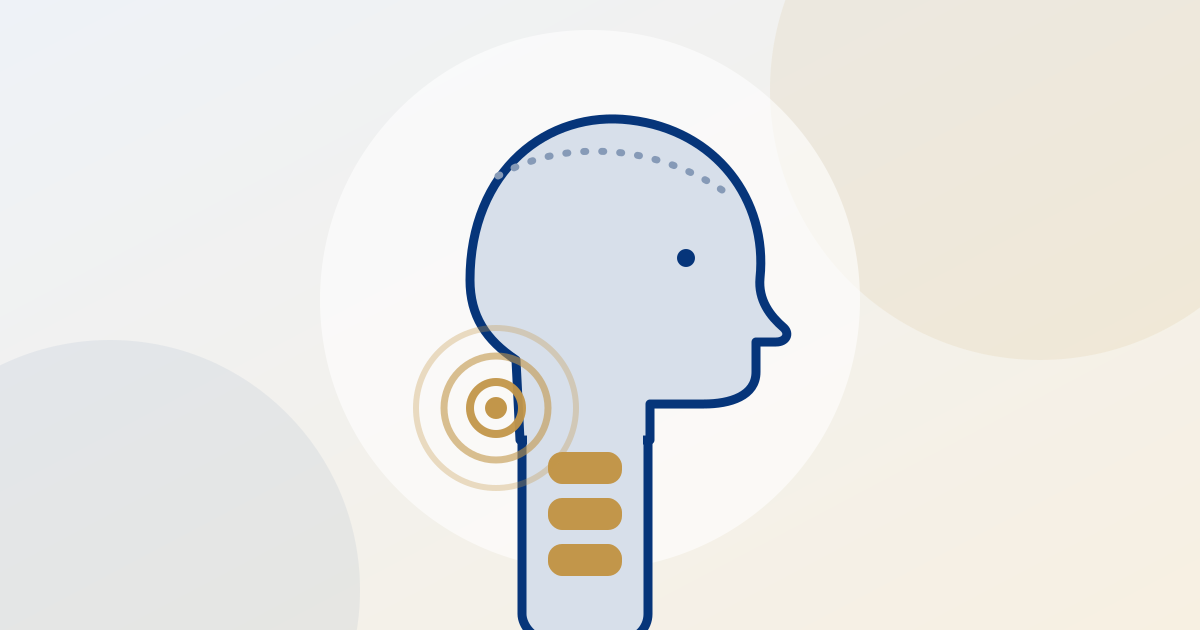
Headache that builds through the workday, feels like a tight band, or starts at the base of your skull? It may be coming from your neck. Here's how to spot it, when to worry, and what the research says about care.
A headache that builds through the workday, feels like a tight band or starts at the base of your skull may be coming from your neck (a tension-type or cervicogenic headache). Common clues are neck and shoulder stiffness, and easing with movement or heat. Some headaches need urgent medical attention, so red flags are screened first. Research suggests manual therapy and specific neck exercises can reduce cervicogenic headache.
If you sit at a desk all day and find that by mid-afternoon your head feels like it's being squeezed, you're in good company. One of the most common things I see in practice is a headache that isn't really a "head" problem at all. It's coming from the neck and shoulders.
What is the difference between tension-type and cervicogenic headache?
Tension-type headache is the most common type of headache there is. It usually feels like pressure or a tight band around the head, often across the forehead or behind the eyes, and tends to affect both sides.
Cervicogenic headache literally means "a headache that starts in the neck." The pain is referred from the joints and muscles of the upper neck. It typically starts underneath the skull and spreads up into the back of the head, sometimes reaching the forehead or behind the eye. It is often worse on one side and gets stirred up by certain neck movements or by holding one position for too long.
Why would a neck problem be felt in your head? The way I explain it to patients: the nerves from the top of your neck and the nerve that supplies your forehead and eyes share the same relay station in the brainstem. Your brain can't always tell which one is sending the signal, so irritation in the neck gets felt as pain in the head.
In real life, many people have a bit of both. The common thread is usually a stiff, irritated neck.
What does it feel like?
- A tight band or pressure around the head
- Pain behind the eyes or across the forehead
- Pain starting under the skull and creeping up the back of the head
- Stiffness in the neck and shoulders
- Worse towards the end of the day, especially after long periods of sitting
- Easing with movement, a good stretch or some heat
That last pair is a useful clue. A headache that builds the longer you sit, and settles once you get moving, points strongly towards the neck.
Who gets neck-related headaches?
I see this most in desk workers: people who spend long hours in front of a computer, in one position, and often a less than ideal one. The muscles at the back of the neck and across the tops of the shoulders work all day to hold the head up. Over time they become tight and irritated, and that irritation shoots up into the head.
It's rarely about one "perfect" posture. In my view, the bigger problem is staying in any single position for too long. Our article on five posture habits for desk workers has practical ideas.
When is a headache NOT from your neck? Red flags
Most headaches are not dangerous, but some need a medical doctor urgently. Please seek medical attention straight away if your headache comes with any of the following:
- A sudden, severe headache that peaks within seconds to a minute
- A new headache, or one that has changed in pattern or keeps getting worse
- Fever, a stiff neck or a rash
- Dizziness or loss of balance
- New nausea or vomiting
- Double vision or other changes in your vision
- Difficulty speaking or swallowing
- Numbness, weakness or confusion
- A headache after a knock to the head
At your first consultation, we screen for these before any treatment begins. If anything points somewhere other than the neck, we refer you to the right person.
Does treatment help neck-related headaches? What the research says
Cervicogenic headache is one of the more rewarding things I treat, because many patients may improve with conservative care.
One of the best-known studies on this (Jull and colleagues, published in Spine in 2002) followed 200 people with cervicogenic headache. Six weeks of manipulative therapy, specific neck exercises, or both, significantly reduced how often headaches came and how intense they were. The benefits were still there a year later. Combining the two wasn't significantly better overall, but about 10% more people got relief with the combination.
To be fair to the evidence, not every study is that impressive. Reviews of spinal manipulation for neck-related headaches generally find a benefit, but some report the effect as small and mostly short term, and many of the trials are small. A 2025 review in Frontiers in Neurology ranked manipulation and mobilisation among the most effective options, while cautioning that the studies vary a lot in quality and method.
That's why my philosophy is not to rely on one technique. I combine hands-on joint work with muscle work, exercise and changes to your daily habits.
What does treatment for neck-related headaches look like?
- Assessment. We look for the joints and muscles that reproduce your familiar headache when they're moved or pressed. Being able to recreate your pain is a strong sign we've found the source.
- Joint work. Spinal manipulation or gentler mobilisation to restore movement in the upper neck.
- Muscle work. Soft tissue techniques or dry needling for tight muscles in the neck and shoulders.
- Exercise. Strengthening the deep muscles that support your neck, so the results hold.
- Habits. Practical changes to your workstation and your day, especially regular movement breaks.
As with any hands-on treatment, some mild soreness or stiffness for a day or two afterwards is common. Serious complications are rare, and we'll talk you through the options so you can choose what you're comfortable with.
What can you do today for a neck-related headache?
- Get up and move every 30 to 45 minutes, even briefly
- Bring your screen up to eye level
- Do a few gentle chin tucks and neck turns during the day
- Use heat on your neck and shoulders in the evening
- Keep a simple headache diary: when it starts, how long you'd been sitting, and what eases it
The bottom line
If your headaches build through the day, sit at the base of your skull or wrap around your head like a band, and come with a stiff neck, there's a good chance your neck is part of the story. Once red flags are ruled out, conservative care may help.
This article is for general education and isn't a substitute for a personal assessment.
Frequently asked questions
How do I know if my headache is coming from my neck?
Neck-related headaches usually start at the base of the skull or feel like a tight band, come with neck and shoulder stiffness, build the longer you sit, and ease with movement. A chiropractic assessment can check whether moving or pressing on your neck reproduces the headache.
Why does my headache get worse at the end of the workday?
Hours in one position keep the neck and shoulder muscles working without a break. As they tire and tighten, they can refer pain into the head, so the headache tends to peak late in the day.
Can a chiropractor help with headaches?
For headaches coming from the neck, it may help. Research suggests manual therapy and specific neck exercises can reduce cervicogenic headache, with benefits lasting up to a year in one well-known trial. Red flags are screened first, and anything outside the neck is referred on.
When should I see a doctor about a headache?
Get urgent medical help for a sudden severe headache, a headache with fever, stiff neck or rash, or one with dizziness, loss of balance, vision changes, difficulty speaking or swallowing, weakness or confusion.
Related reading
- Headaches and migraine with a neck component
- Neck pain and stiffness
- Five posture habits for desk workers
- Exercise: chin tuck
- The energy crisis inside a muscle knot
Sources
- Jull G, Trott P, Potter H, et al. A randomized controlled trial of exercise and manipulative therapy for cervicogenic headache. Spine. 2002;27(17):1835-1843. View
- Xu X, Ling Y. Comparative safety and efficacy of manual therapy interventions for cervicogenic headache: a systematic review and network meta-analysis. Front Neurol. 2025. View