
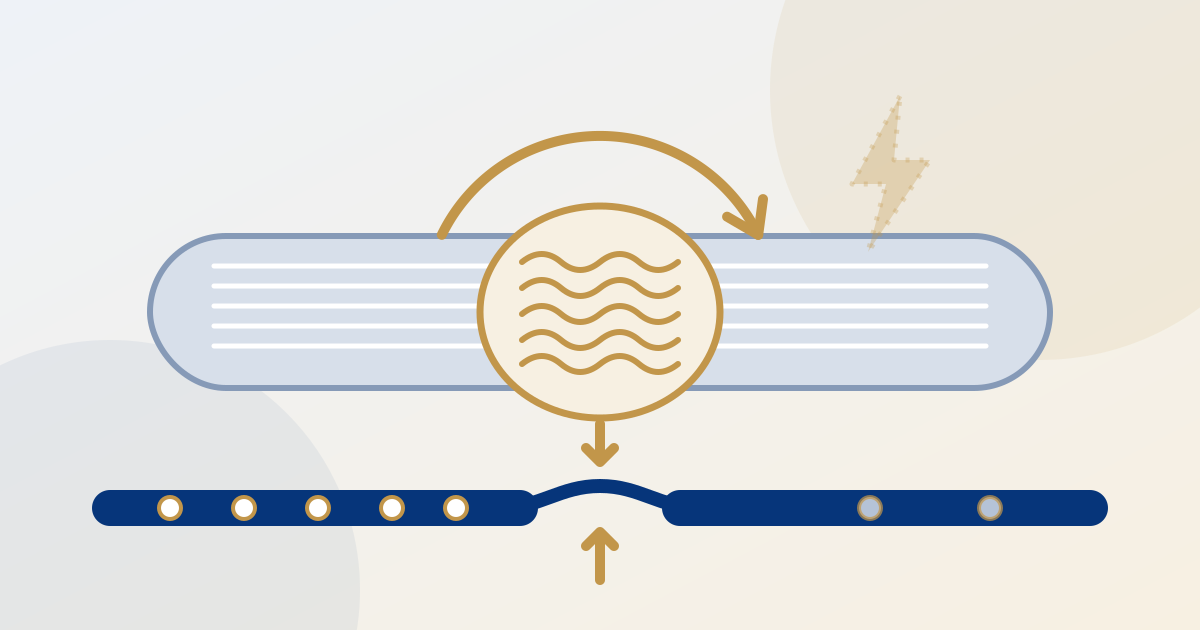
A muscle knot is more than a tight spot. Squeezed blood vessels, too little oxygen and a build-up of irritating chemicals can trap the muscle in a cycle it can't escape by itself. Here's what's going on, and how treatment aims to break it.
A muscle knot (myofascial trigger point) is a small band of muscle fibres that has stayed contracted and won't release. The leading explanation is an "energy crisis": the tight fibres squeeze their own blood supply, so they get less oxygen and can't make the energy they need to relax, while irritating chemicals build up and keep the area painful. Treatment aims to break that cycle by getting blood moving again and calming the nerves that keep the muscle on guard.
"I've got a knot in my shoulder." I hear it almost every day in practice, and patients can usually put a finger right on the spot. It's hard, it's tender, and it doesn't let go no matter how much you stretch or rub it. So what's actually going on inside that muscle, and why does it get stuck?
The explanation I use with patients is something researchers call the energy crisis. It isn't the whole story, and I'll be honest about where the science is still debated, but it's the most widely used model we have, and it explains a lot of what we feel and see in the practice.
What's the difference between a muscle knot and a spasm?
People use the words interchangeably, but they're slightly different. A spasm is when a whole muscle suddenly contracts on its own, like a calf cramp in the middle of the night. A knot (the technical term is a myofascial trigger point) is a small band of muscle fibres that has stayed shortened and won't release. The rest of the muscle around it may be relatively normal.
The energy crisis applies mostly to knots. A spasm can contribute to the same problem, but a knot is the one that hangs around for weeks.
Why won't a muscle knot go away? The energy crisis explained
Step one: the pressure goes up, the blood flow goes down
Think of a garden hose. Water flows because the pressure at the tap is higher than at the other end. Now imagine someone stands on the hose. The tap hasn't changed, but much less water gets through.
Something similar happens in a contracted muscle. When muscle fibres tighten and stay tight, the pressure inside the muscle rises and squeezes the tiny blood vessels running through it. Your blood pressure is still pushing blood in, but the difference between that push and the pressure inside the muscle gets smaller, so blood moves through more slowly.
Less blood flow means less oxygen and fewer nutrients reaching those fibres, and slower removal of whatever they produce.
We have some evidence that this happens in real knots. A German study from 1990 measured oxygen levels in hard, tender spots in back muscles and found very low oxygen in the centre of them. More recently, Doppler ultrasound studies (Sikdar and colleagues, 2009) found unusual blood flow patterns around trigger points, including blood briefly flowing backwards between heartbeats. That's a sign of high resistance in the local blood vessels.
Step two: relaxing actually costs energy
This is the part most patients find surprising. We tend to think of contracting a muscle as the hard work and relaxing as the easy part. At the level of the muscle fibre, it's the other way around.
Muscle fibres contract by tiny protein strands latching onto each other and pulling. To let go, each of those latches needs a dose of energy, in the form of a molecule called ATP. Your muscles make ATP using oxygen.
So if a group of fibres is starved of oxygen, it struggles to make enough energy to release. The fibres stay locked short. That's the "energy crisis": the muscle doesn't have the energy it needs to relax.
Step three: irritating chemicals build up
When blood flow is poor, the muscle's local environment changes. Researchers at the US National Institutes of Health (Shah and colleagues, 2005 and 2008) used a very fine needle to sample the fluid inside active trigger points. Compared with normal muscle, that fluid was more acidic and contained higher levels of chemicals linked to pain and inflammation, such as substance P, CGRP and bradykinin.
Those chemicals sensitise the nerve endings in the area. That's a big part of why a knot is so tender to press, and why it can refer pain to other places, like a shoulder knot sending pain up into the head.
You may have heard this blamed on "lactic acid" or "toxins." That's an old myth. Lactic acid isn't what causes muscle pain. The better description is a build-up of chemical irritants and acidity in tissue that isn't being properly flushed.
The vicious cycle
Put those steps together and you can see how a knot keeps itself going:
- The fibres tighten, the pressure goes up and blood flow goes down.
- Less oxygen means less energy to release, so the fibres stay tight.
- Irritating chemicals build up and the area becomes painful.
- Pain and irritation keep the muscle guarded and tight.
- Back to step one.
To be fair to the evidence, this cycle is a model, not settled fact. Some research suggests that pain can actually make a muscle less active rather than more, and the exact mechanism behind trigger points is still argued about. But in my clinical experience, the energy crisis explains what patients feel very well, and more importantly, it gives us a clear target for treatment.
How is a muscle knot treated? Breaking the cycle
Whatever technique we use for a knot, the aim is to interrupt that loop. In my philosophy there are two main ways to do that: restore blood flow to the area so the fibres get oxygen and the irritants can drain away, and calm the nervous system so the muscle stops guarding. Most treatments do a bit of both.
Here's an honest look at the common options:
- Heat. Warming the tissue widens the blood vessels and increases blood flow. This is well supported, although heat packs mostly reach the more superficial layers of muscle. It also feels good, which helps the muscle relax.
- Dry needling. A fine needle is placed into the knot, often causing a quick twitch of the muscle. A 2012 study of the upper trapezius (the muscle across the top of the shoulder) by Cagnie and colleagues found that blood flow and oxygen levels in the muscle increased after needling, in people without neck pain. Shah's early research also suggested that levels of some of those irritating chemicals dropped after the muscle twitched.
- Therapeutic ultrasound. At certain settings, ultrasound gently heats deeper tissue. The theory is sound, but the clinical research on ultrasound for knots specifically is weak and mixed, so I see it as a supporting tool rather than a main treatment.
- Massage and soft tissue work. Many people find massage helps them feel better, but probably not because it "flushes" the muscle. A 2010 study by Wiltshire and colleagues actually found that massage after forearm exercise reduced blood flow to the muscle rather than increasing it. My view is that massage works more through the nervous system: reducing pain sensitivity and helping the muscle let go of its guarding. You can read about massage therapy at our practice.
- Ischaemic compression (trigger point pressure). Here we press firmly on the knot and hold, then release. The idea is that when the pressure comes off, there's a rush of fresh blood into the area. It's a plausible theory, though it hasn't been measured well, and it likely also works by calming the nerves in the area.
Different patients respond to different approaches, which is why we often combine them, and why we'll also look at what's making the knot form in the first place: the posture you hold all day, the way you move, stress, and how strong and conditioned the muscle is.
What can you do at home for a muscle knot?
- Use heat on the area for 15 to 20 minutes, especially in the evening
- Avoid staying in one position for too long; get up and move every 30 to 45 minutes (our article on posture habits for desk workers has ideas)
- Keep the area gently moving rather than resting it completely
- Try gentle stretching, held for 20 to 30 seconds at an effort of about 3 or 4 out of 10
- Try gentle, sustained pressure on the knot with a ball against a wall, without forcing it
- Notice when it flares up; patterns like long drives or stressful days are useful clues
When might a knot be something else?
Most muscle knots are uncomfortable but not serious. See a health professional promptly if your pain followed an injury or fall, comes with numbness, tingling or weakness in an arm or leg, comes with fever or unexplained weight loss, or keeps getting worse despite rest. At your first consultation, we check for these before any treatment begins.
The bottom line
A muscle knot isn't just a tight spot. It's a small area of muscle caught in a loop of squeezed blood vessels, low oxygen, too little energy to relax, and a build-up of irritating chemicals. Treatment aims to break that loop by getting blood moving again and calming the nerves that keep the muscle on guard.
If you've got a knot that just won't let go, book an assessment with us at Hippocrates Health World in Glen Marais, Kempton Park.
This article is for general education and isn't a substitute for a personal assessment.
Frequently asked questions
What is a muscle knot?
A muscle knot, or myofascial trigger point, is a small band of muscle fibres that has stayed contracted and won't release. It feels hard and tender, and can send pain to other areas, such as from the shoulder into the head.
Why won't my muscle knot go away by itself?
The leading explanation is an "energy crisis." The tight fibres squeeze their own blood supply, so they get less oxygen and can't make the energy they need to relax. Irritating chemicals build up, keeping the area painful and tight, and the cycle continues.
Is a muscle knot caused by lactic acid?
No. That's a common myth. Research on trigger points points instead to increased acidity and a build-up of pain and inflammation chemicals such as substance P and bradykinin in tissue with poor blood flow.
Does heat help a muscle knot?
Often, yes. Heat increases blood flow to the area and helps the muscle relax, although a heat pack mainly reaches the more superficial layers of muscle.
How does dry needling help a muscle knot?
Research suggests dry needling can increase blood flow and oxygen in the treated muscle, and may reduce the level of irritating chemicals in the knot. It also appears to calm the local nerves.
Related reading
- Stretching: What It Actually Does for Your Pain
- Five posture habits for desk workers
- When your headache is coming from your neck
- Neck pain and stiffness
- Posture-related pain from desk work
- Dry needling at Edwards Chiropractors Inc
Sources
- Brückle W, Suckfüll M, Fleckenstein W, Weiss C, Müller W. Gewebe-pO2-Messung in der verspannten Rückenmuskulatur (M. erector spinae). Z Rheumatol. 1990;49:208-216. View
- Sikdar S, Shah JP, Gebreab T, et al. Novel applications of ultrasound technology to visualize and characterize myofascial trigger points and surrounding soft tissue. Arch Phys Med Rehabil. 2009;90(11):1829-1838. View
- Shah JP, Phillips TM, Danoff JV, Gerber LH. An in vivo microanalytical technique for measuring the local biochemical milieu of human skeletal muscle. J Appl Physiol. 2005;99:1977-1984. View
- Shah JP, Danoff JV, Desai MJ, et al. Biochemicals associated with pain and inflammation are elevated in sites near to and remote from active myofascial trigger points. Arch Phys Med Rehabil. 2008;89(1):16-23. View
- Cagnie B, Barbe T, De Ridder E, Van Oosterwijck J, Cools A, Danneels L. The influence of dry needling of the trapezius muscle on muscle blood flow and oxygenation. J Manipulative Physiol Ther. 2012;35(9):685-691. View
- Wiltshire EV, Poitras V, Pak M, Hong T, Rayner J, Tschakovsky ME. Massage impairs postexercise muscle blood flow and "lactic acid" removal. Med Sci Sports Exerc. 2010;42(6):1062-1071. View