
Chiropractic Techniques & Treatments
Every patient is assessed individually, and your treatment plan is built from your examination findings. Below is a short guide to the specific techniques we use and what each one involves.
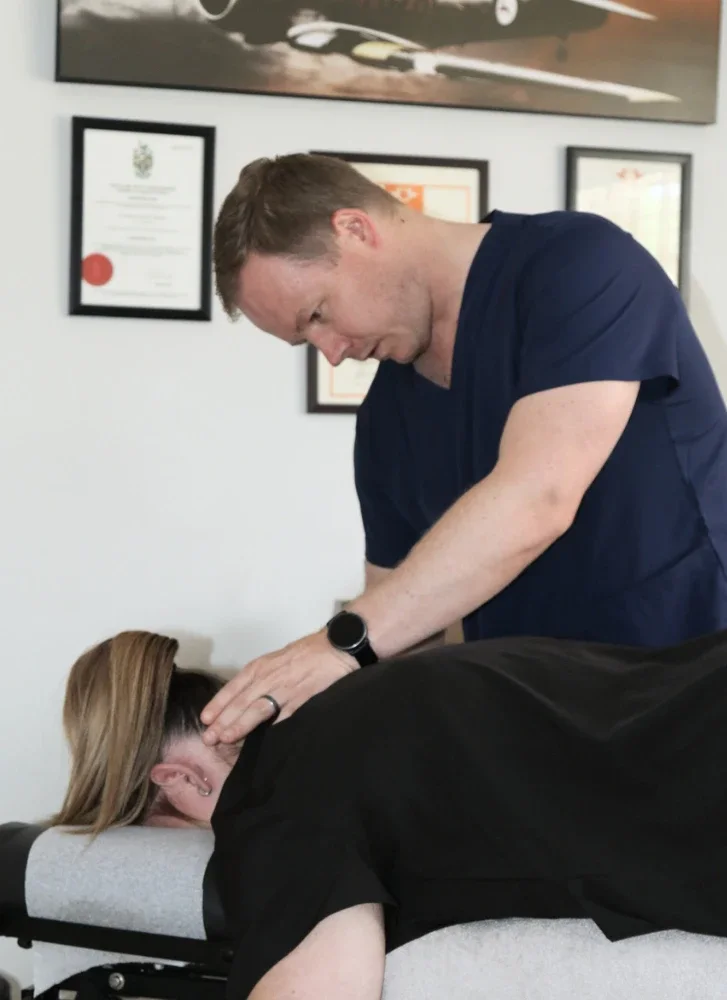
Hands-on care, explained as we go
Every visit begins with a conversation and a physical examination, so the techniques we choose are matched to what we find. Before we begin, we explain what we are doing and why, and you can ask us to pause or change anything at any time.
Many treatment plans combine more than one approach, such as joint techniques, soft tissue work and exercises to do at home. The guide below explains each one.
What to expect at your first visit →Spinal Manipulation
Spinal manipulation is the foundation of chiropractic care: a controlled, targeted movement applied to a spinal joint to help restore normal motion, ease pain and reduce muscle tension. We choose the technique that suits your body, your condition and your comfort, most often one of the three below.
Diversified Technique
The most widely used chiropractic technique. A precise, hands-on thrust is applied directly to the affected joint to help restore movement, often accompanied by the familiar release of gas from the joint.
Thompson Drop Technique
Performed on a specialised table with sections that drop slightly as the adjustment is made. The subtle drop assists the thrust, allowing an adjustment with less force, a comfortable option for patients who prefer a gentler approach.
Activator Technique
A small, handheld spring-loaded instrument delivers a quick, low-force, precise impulse to a specific joint. It's a controlled alternative to a manual thrust, well suited to children, older adults and anyone who prefers a lighter touch.
Peripheral Joint Manipulation
Manipulation isn't limited to the spine. We also treat restricted or painful joints in the shoulders, elbows, wrists, hips, knees and ankles, using the same controlled, targeted movements to help restore range of motion and ease pain at the joint itself.
Electrotherapy (Interferential Current)
Two medium-frequency electrical currents are passed through the skin and intersect at the site of pain, producing a therapeutic effect deeper in the tissue than either current could reach alone. It's commonly used to ease pain, reduce muscle spasm and calm inflammation.
Ultrasound Therapy
High-frequency sound waves generate gentle heat deep within soft tissue, increasing local blood flow and helping to reduce pain, stiffness and swelling. It's a comfortable, non-invasive addition to hands-on treatment for many soft-tissue complaints.
Dry Needling
Thin, sterile filament needles are inserted into tight muscle bands or trigger points to release tension, reduce pain and help restore normal muscle function. Unlike acupuncture, dry needling is based on Western anatomy and neurophysiology, targeting the specific muscle behind your symptoms.
Graston Technique
An instrument-assisted soft-tissue technique using specially designed stainless-steel tools to treat areas of tightness, scar tissue and restriction. It helps break down adhesions and encourages the body's natural healing response in muscles, tendons and fascia.
Massage Therapy
Skilled hands-on work on the muscles and other soft tissues, with the technique and pressure matched to what you need and find comfortable. It may help ease muscle tension, tightness and soreness, and many people find it relaxing. Our chiropractors use it as one of the tools in a treatment plan, alongside techniques such as spinal manipulation and dry needling.
Kinesiology Taping
An elastic therapeutic tape applied over a muscle or joint to provide support, reduce pain and swelling, and encourage normal movement patterns, all without restricting your range of motion. Often used alongside treatment to support recovery between visits.
Webster Technique
A specific chiropractic sacral analysis and gentle adjustment used during pregnancy to reduce sacral misalignment and sacroiliac joint dysfunction, easing the pelvic tension and imbalance that can come with a growing baby. Many pregnant patients use it to help manage back and pelvic discomfort through their pregnancy.
Chiropractic care for children
We match our techniques to the age, size and comfort of each child, including low-force options such as the Activator instrument. A parent or guardian completes the new patient form and gives consent, and a full history and examination come before any treatment.
Sports injury treatment
We look at the injured area and at how you train and move. Care may include joint manipulation, soft tissue work, dry needling, kinesiology taping and rehabilitation exercises, together with advice on training load.
Conditions we regularly treat
- Lower back pain (acute and chronic)
- Neck pain and stiffness
- Sciatica and referred leg pain
- Headaches and migraine with a neck component
- Mid-back and rib joint pain
- Sports and overuse injuries
- Shoulder, hip, knee and ankle pain
- Posture-related pain from desk work
- Pregnancy-related back and pelvic discomfort
- Reduced mobility and stiffness in older adults
Not sure if we can help? Get in touch and describe what is going on. If chiropractic is not the right fit, we will tell you and point you in the right direction.
Your first visit, step by step
Case history
We talk through your symptoms, your general health, medications, and what you need to get back to.
Physical examination
Orthopaedic, neurological and movement testing to work out what is driving your symptoms. We refer for imaging or a specialist opinion if it is warranted.
Findings & plan
A plain-language explanation of what we found, treatment on the day where appropriate, and a clear plan with realistic timeframes and costs.
Please bring your ID, medical aid details, and any recent scans or reports. Wear comfortable clothing you can move in.
Book a consultation
Reserve a first appointment online or by phone. Let us help you find an appropriate appointment slot.